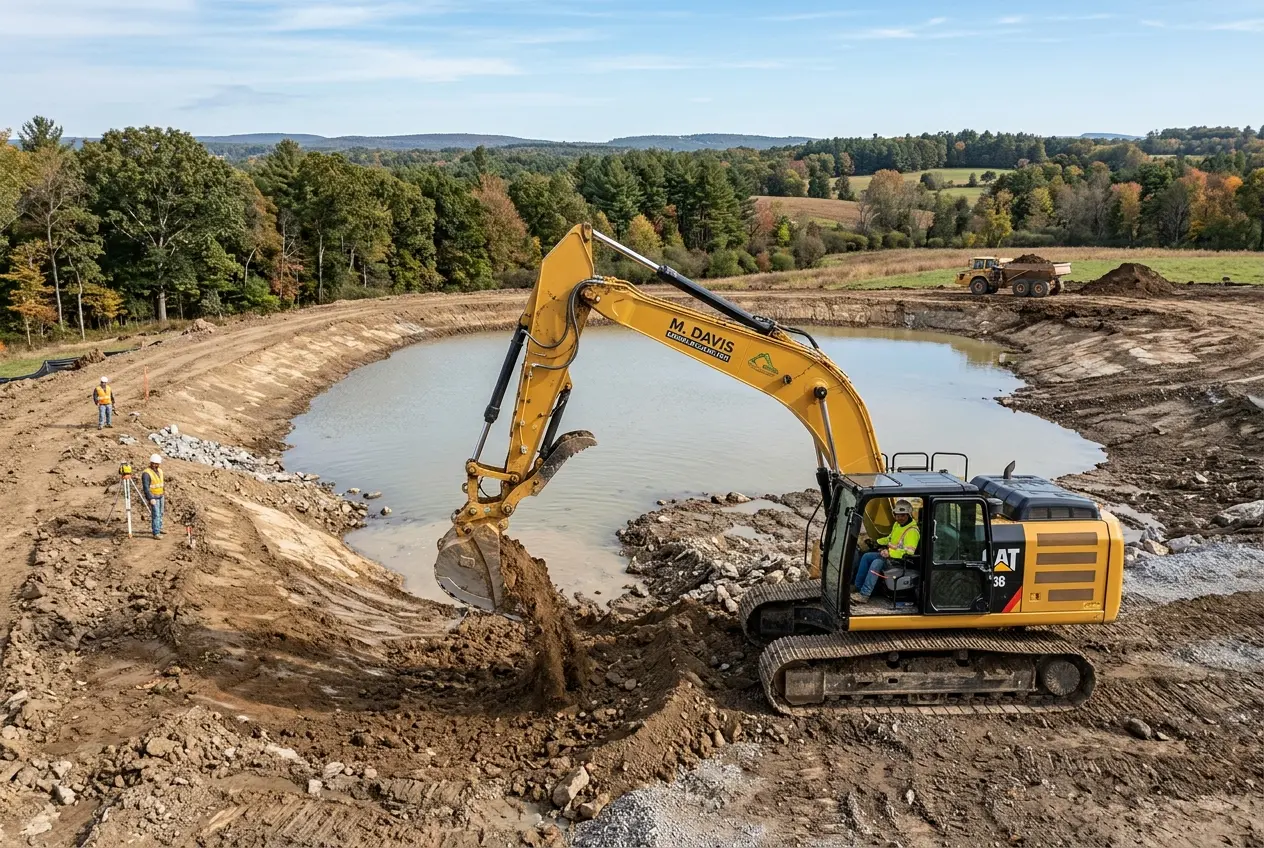
Constructing water features in Middle Tennessee requires understanding our unique hydrology—from the karst formations under Brentwood estates to the clay beds lining Old Hickory Lake lots. We've shaped 150+ ponds across Williamson and Rutherford Counties, each designed for local conditions.
Our designs account for Nashville's seasonal rainfall patterns, creating overflow channels that prevent erosion during spring downpours. For Murfreesboro's clay-heavy soils, we incorporate bentonite liners to prevent excessive seepage. Franklin horse farms get specialized bank sloping for safe livestock access.
Every project includes native plant shelf construction and proper aeration planning. We coordinate with TWRA on fish stocking permits and Metro Water Services on drainage impact studies—details many excavators overlook.
Our designs account for Nashville's seasonal rainfall patterns, creating overflow channels that prevent erosion during spring downpours. For Murfreesboro's clay-heavy soils, we incorporate bentonite liners to prevent excessive seepage. Franklin horse farms get specialized bank sloping for safe livestock access.
Every project includes native plant shelf construction and proper aeration planning. We coordinate with TWRA on fish stocking permits and Metro Water Services on drainage impact studies—details many excavators overlook.
Our Process
- 01 Step 1: Percolation testing and soil analysis
- 02 Step 2: GPS-guided earthmoving
- 03 Step 3: Shelf construction and shaping
- 04 Step 4: Final grading with erosion controls
Benefits
- Proper water retention
- Wildlife habitat creation
- Aesthetic natural contours
- Long-term maintenance reduction